I love editing and I’m real gifted at it. I have an innate ability to take good material and make it better, or take bad material and make it fair. I’m compulsive about it. I think I’m even an editor in real life.
-Marcia Lucas
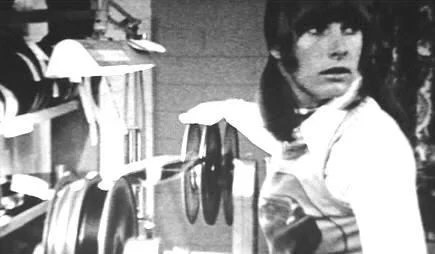
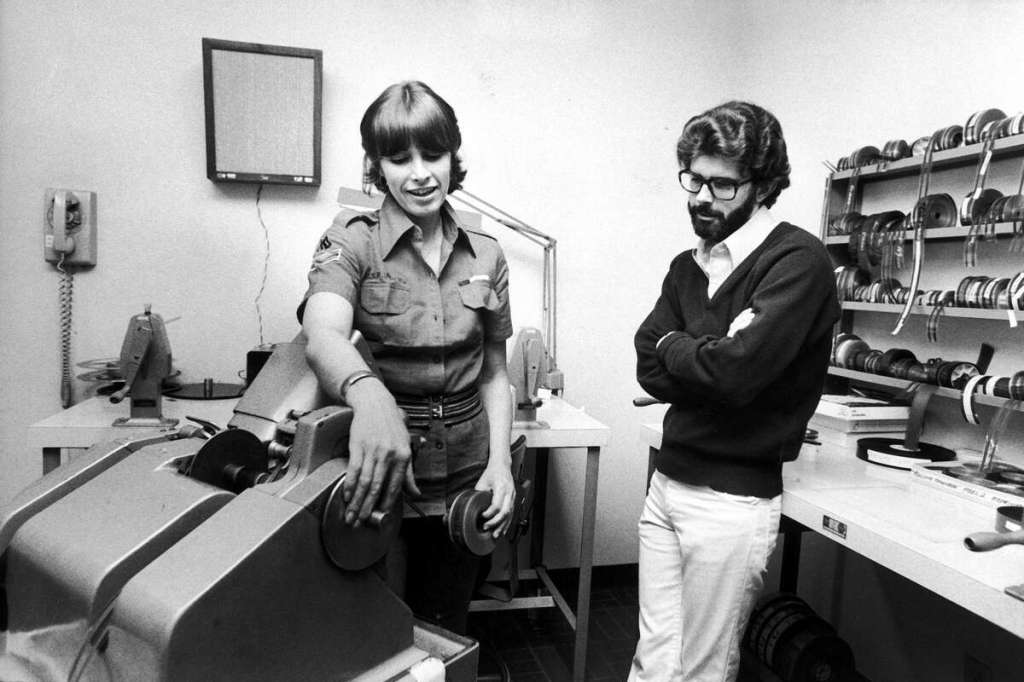
Mark Hamill once claimed that Marcia Lucas, one-time wife of George Lucas and one of the film editors that won an Academy Award for her work on Star Wars, “was really the warmth and the heart of those films”. She was also, perhaps, one of the most experienced and accomplished talents on the crew. By the time Marcia Lucas came onboard to help try to save the story from the editing problems it inherited from a previous editor, she had already received an Academy Award nomination for the editing of the film American Graffiti. In fact, Marcia Griffin at twenty years old had already been working as an assistant editor before she even met George Lucas, who was still a student in film school at the time.
Marcia broke into the film world as a film librarian at Sandler Films, cataloguing and archiving old reels. She rose quickly through the ranks to become an assistant film editor, hired to work in that capacity with Verna Fields, one of the major female film editors in the business at the time. (Among her many accolades, Fields would later win an Oscar for her work on Jaws).
On a government documentary editing job with Fields, Marcia was paired with the young UCLA student George Lucas, who would later become her husband. Marcia was soon called on by Lucas’ friend Francis Ford Coppola to help edit his 1968 film The Rainmaker. It launched her career into the stratosphere. She worked on The Candidate in 1972, and successively on two more pictures, both directed by George Lucas, THX-1138 and American Graffiti, earning her first Academy nomination for the latter in 1974. She became a high demand Film Guild editor, working for Martin Scorsese on Alice Doesn’t Live Here Anymore, Taxi Driver, and New York, New York, which would become cultural cornerstones in their own right.
Perhaps a hallmark of her particular talent set was making sure her films made not just intellectual but emotional sense. When she came to work on the three Star Wars films, she provided much of what was called the “crying and dying”–in other words, she worked heavily on the scenes that needed to land emotionally with the audience. She was reportedly brought in to help with Han and Leia’s first kiss because Lucas felt it needed a woman’s touch. She wrestled with Yoda’s death scene trying to eke the appropriate amount of emotion out of it. The tension-filled and triumph-crowned trench run at the end of the first film won her an Academy Award. Lucas said, “It took her eight weeks to cut that battle. It was extremely complex, and we had 40,000 feet of dialogue footage of pilots saying this and that. And she had to cull through all that, and put in all the fighting as well.”
And it wasn’t just Star Wars that benefitted from her touch. When she saw the first cut of Indiana Jones and the Raiders of the Lost Ark, she insisted it needed an extra scene at the end to provide resolution for the protagonists’ arcs. (As it had stood, the film simply ended when the action did.) By the late 2000s, many had begun to credit her with being the magic ingredient to the success of many of Lucas’s films. In a rare retrospective, Marcia demurred: “I wouldn’t think so. I definitely made scenes work. I made the end battle work, I definitely had a lot to do with making it work, but I wasn’t the writer and I wasn’t the director, and I didn’t come up with the creative names, Darth Vader, Luke Skywalker. All those names are classics. George came up with all of it using his amazing imagination.”
“I don’t think she got taken seriously.”
-Sandra Weintraub, producer and associate of Martin Scorsese
Marcia remains something of an elusive official presence. She left her career largely behind her when her relationship with Lucas ended. Her last film credit was as a producer for the film No Easy Way in 1996. If her work is ever highlighted, it’s generally in connection with speculation about the work of George Lucas, rather than about her talent in its own right. Editors work behind curtains, and their touch is perhaps most successful when no one but the initiated knows it’s there. Nevertheless, her invisible hand remains felt in the emotional throughlines of some of the best New Hollywood films of the 1960s, 70s, and 80s. Given their collective longevity, it must be said that she certainly made them work.
Sources
Degravio, Will. “A Brief History of Marcia Lucas’ Role in the Star Wars Universe.” Film School Rejects.com, September 24, 2021. Accessed August 19, 2024.
Scanlon, Paul (August 25, 1977). “George Lucas: The Wizard of ‘Star Wars’”. Rolling Stone (Interview).
Biskind, Peter (1998). Easy Riders, Raging Bulls: How the Sex-Drugs-and Rock ‘n Roll Generation Saved Hollywood. Simon & Schuster. ISBN 978-0-684-80996-0. OCLC 38389788.
Rinzler, J. W. (2021). Howard Kazanjian: A Producer’s Life. Introduction by Marcia Lucas. Cameron + Company. ISBN 978-1-95183-618-4.
Jones, Brian Jay. George Lucas: A Life. Little, Brown and Company, 2016. ISBN 0316257443.
Turney, Drew. In an Edit Bay Far, Far Away: Star Wars Editor Paul Hirsch on His New Book and Lucas’ Legacy. November 8, 2019. Accessed August 19, 2024.
 The Feminine Genius
Leave a comment